
Across industries today, from telecommunications to global technology firms, one pattern continues to define high performance. Growth is no longer driven by visibility alone, but by systems that scale efficiently behind the scenes.
Recent market activity reinforces this. Leading companies are not only expanding revenue, they are doing so while improving operational discipline. Costs are optimized, processes are refined, and investments, particularly in technology, are tied directly to measurable outcomes. What stands out is not just growth, but the structure supporting it.
This reflects a broader shift in how modern organizations operate. Performance is no longer a function of effort alone, but of coordination. Systems determine how effectively resources are deployed. Processes determine how consistently outcomes are delivered. Leadership determines how well all moving parts align toward a shared objective.
In this context, scale is not accidental. It is designed.
Organizations that sustain growth do so because they build with intention. They invest in infrastructure that supports expansion without compromising quality. They prioritize clarity across teams, ensuring that each function contributes to a defined outcome. They move beyond reactive operations into structured, data-informed execution.
These principles extend directly into hospitality.
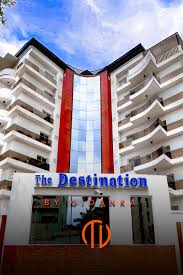
Hospitality, at its core, is often perceived through experience, how a guest feels within a space, how seamless their stay appears, how effortlessly their needs are met. But behind that experience lies a system of interdependent functions working in alignment. From front office operations to housekeeping, from food and beverage to maintenance and logistics, each unit contributes to a single outcome.
The difference between average and exceptional hospitality is not intention. It is execution.
Execution requires structure. It requires systems that anticipate demand, processes that eliminate friction, and teams that operate with clarity and consistency. It requires leadership that understands how to align people, processes, and standards in a way that produces reliable results, not just occasional success.
At this level, comfort is not incidental. It is engineered.
This is why forward-looking hospitality companies are evolving beyond traditional service models. They are building operational frameworks that allow for scalability without losing quality. They are investing in people, not just as a workforce, but as a critical layer within the system. They are adopting a long-term view, where every decision contributes to sustainability, efficiency, and experience.
At Smart Residences, this perspective remains central to how we operate.
We approach hospitality as a coordinated system, one where design, operations, and human capital intersect to deliver consistent outcomes. Our focus is not only on what guests experience, but on how that experience is created, refined, and sustained over time.
Because ultimately, what defines high-performing organizations is not what is seen on the surface. It is the structure beneath it.